Carnosine Basics
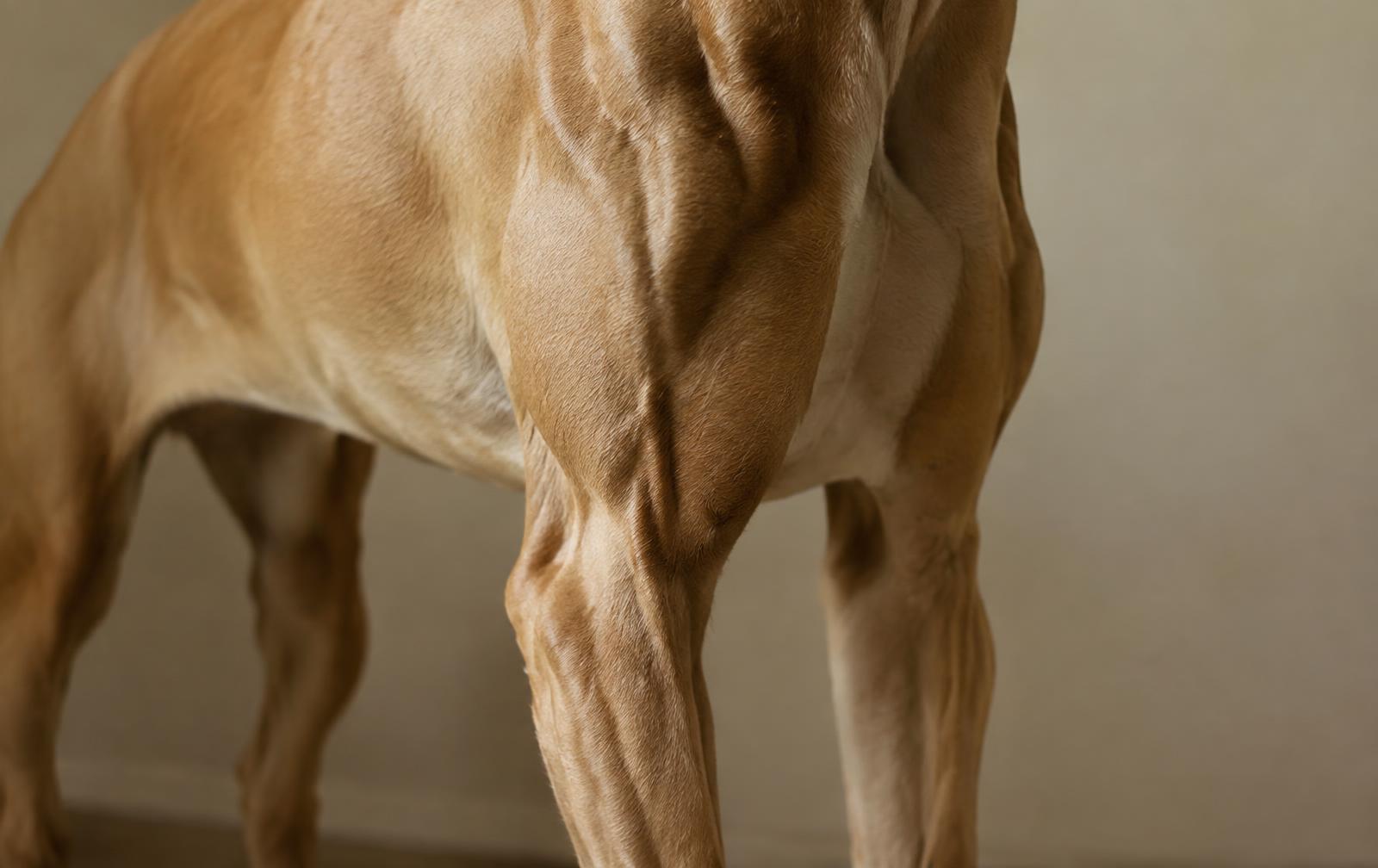
What Is Carnosine and Why Is It Found in Dog Muscle?
Carnosine is a naturally occurring dipeptide concentrated in skeletal muscle. Here is what researchers understand about its role — and what remains uncertain.
· 7 min read
Carnosine Basics · Guide
Carnosine is a naturally occurring dipeptide found in skeletal muscle and other tissues. Dogs have carnosine in their bodies, but its exact concentration, how it varies between dogs and what that means in practice remain far less studied than in humans and some other species.
4 articles
Carnosine is a dipeptide: a very small molecule made of two amino acids, beta-alanine and L-histidine, joined by a single bond. It was first isolated from meat extract in the early 1900s and has since been found in the tissues of many vertebrates, including dogs, horses and humans.
Because it is so small, carnosine stays dissolved in the fluid inside cells rather than forming part of their structure. That makes it suited to a chemical job — taking up hydrogen ions — rather than a structural or fuel role.
Carnosine is not a vitamin and is not considered an essential nutrient for dogs. The body builds it from its two components using an enzyme called carnosine synthase. For the full explanation, read what carnosine is and why it is found in dog muscle.
Histidine is a standard dietary amino acid supplied by protein in food. Beta-alanine is unusual: it is not used to build proteins, and the body obtains it partly from the diet and partly from its own metabolism. In human studies, beta-alanine availability is the main factor limiting how much carnosine muscle makes. Whether the same holds to the same degree in dogs has not been established.
Yes. Dogs make and store carnosine themselves, so it is part of normal canine muscle chemistry rather than something that has to be added. Direct measurements in dog muscle exist, including a frequently cited 1990 comparison of greyhounds, thoroughbred horses and humans.
What is much less certain is the detail: how carnosine varies between breeds, ages, training levels and individual dogs, and whether those differences matter in daily life. Dogs also store anserine, a closely related compound, so studies that report “histidine dipeptides” are not always reporting carnosine alone. We look at the canine measurements in detail in whether dogs naturally have carnosine in their muscles.
In the mammals that have been studied, skeletal muscle — the muscle used for movement — holds by far the largest share of the body's carnosine. Smaller amounts are found in other tissues, including parts of the nervous system and heart muscle.
Within skeletal muscle, concentrations are generally higher in fast-twitch fibres, which produce short, powerful contractions, than in slow-twitch, endurance-oriented fibres. Most detailed fibre-type data come from human and laboratory studies rather than dogs, so the exact canine pattern is less well documented.
The best-supported explanation is buffering. Hard-working muscle produces hydrogen ions, and carnosine's histidine portion is chemically well suited to accepting them at the pH found inside muscle cells. Having a large store of a freely dissolved buffer where acid is produced makes biological sense.
Comparative research supports this. The greyhound–horse–human comparison found that the two sprint-adapted species had higher muscle buffering capacity and higher histidine-dipeptide content than human muscle. This is consistent with carnosine being part of how muscle copes with intense effort — although it is one of several buffering systems, not the only one.
Carnosine is one contributor to the muscle's buffering system — not a switch that changes how a dog performs.
pH is a measure of acidity. Muscle cells work best within a fairly narrow pH range. During gentle activity, energy comes mostly from aerobic metabolism, which produces little acid. During sudden hard effort, muscle relies more on rapid glycolysis, which can generate hydrogen ions faster than they can be removed, and pH inside the cell falls.
Buffers such as carnosine, phosphate and proteins take up some of those ions and slow the change. They do not prevent acidity entirely. Hydrogen ions are also moved out of the cell and carried away in the blood, and pH typically returns towards normal within minutes to tens of minutes after the effort ends.
Acidity is only one of several factors associated with muscle fatigue. The older idea that “lactic acid” alone causes tired or sore muscles has been substantially revised. Our article on what owners should understand about muscle fatigue explains the other contributors.
Every contraction is powered by ATP, and muscle holds only a few seconds' worth. In the first seconds of a sprint, ATP is rebuilt almost instantly from phosphocreatine. As effort continues, rapid glycolysis takes a larger share, and over longer efforts aerobic metabolism provides most of the energy.
Carnosine's role sits mainly in the middle of this sequence, when glycolysis is producing acid quickly. The nervous system, body temperature and hydration also shape how a dog copes with hard work — dogs lose heat mainly by panting, which makes hot conditions especially demanding. For a step-by-step account, read what happens inside a dog's muscles during intense exercise, and for how this applies to sporting and working dogs, see what the science says about carnosine, exercise and recovery in active dogs.
The names differ by two letters, but the molecules are unrelated in structure and function. Carnitine is made mainly in the liver and kidney from lysine and methionine, and its central job is carrying long-chain fatty acids into mitochondria to be burned for energy. That makes it most relevant to sustained, fat-fuelled activity and to heart muscle.
In veterinary medicine, carnitine is discussed mainly in specific clinical contexts, such as certain forms of canine heart muscle disease. Evidence about carnitine is not evidence about carnosine. The full comparison is in carnosine vs carnitine for dogs.
Creatine is stored in muscle mainly as phosphocreatine, an immediate energy reserve used to rebuild ATP in the first seconds of explosive effort. Carnosine does not supply energy. It helps manage a by-product of rapid energy production — the build-up of hydrogen ions.
Both are active during intense work, but they solve different problems and cannot substitute for each other. Human sports science has studied both creatine and beta-alanine supplementation extensively; that work is human evidence and does not establish the same effects in dogs. Read more in why carnosine and creatine are not the same.
Not much, compared with humans. The core canine facts — that dogs store carnosine and related dipeptides in muscle, and that sprint-bred greyhound muscle has high buffering capacity — rest on a small number of measurement studies, often involving few animals and specific populations.
Measuring carnosine usually requires a muscle biopsy, which is routine for consenting human volunteers but raises ethical and practical questions in dogs. As a result, there is very little canine data on variation by breed, age or diet, and no well-established body of controlled canine trials testing whether changing carnosine intake changes performance, recovery or health outcomes.
A great deal about mechanism. Human studies have shown that muscle carnosine can be raised with beta-alanine supplementation and that this may modestly affect certain kinds of high-intensity exercise in people. Horses, as elite athletic animals, have been studied for muscle buffering capacity. Laboratory work has explored carnosine's ability to interact with reactive molecules and metal ions.
Our trust principle: human or equine studies can help researchers understand mechanisms and generate hypotheses, but they cannot automatically establish the same outcome in dogs.
Dogs differ from humans and horses in diet, digestion, muscle fibre composition and the enzymes that handle these molecules. A finding in another species is a good reason to ask a question about dogs, not an answer to it. Our guide to how to read carnosine research across dogs, horses, humans and the lab explains how we weigh each kind of evidence.
Carnosine is a dipeptide of beta-alanine and histidine, made in the body.
Skeletal muscle is its main store in mammals that have been studied.
It contributes to buffering hydrogen ions inside muscle cells.
Dogs store carnosine and anserine in skeletal muscle.
Greyhound muscle has been measured as having high buffering capacity and high histidine-dipeptide content compared with human muscle.
In humans, beta-alanine supplementation raises muscle carnosine and may modestly affect some high-intensity exercise.
Laboratory studies describe antioxidant-like and anti-glycation activity under experimental conditions.
How muscle carnosine varies between breeds, ages and training levels in dogs.
Whether diet meaningfully changes canine muscle carnosine.
Whether any change in carnosine intake affects performance, recovery or healthy ageing in dogs.
It does not show that adding carnosine improves performance or speeds recovery in dogs.
It does not show that carnosine prevents or treats any disease in dogs.
It does not show that dogs eating a complete and balanced diet are short of carnosine.
It does not show that laboratory antioxidant findings occur to a meaningful degree in living dogs.
Absence of evidence is not proof that an effect does not exist; often the right studies have simply not been done. The honest position is that these questions remain open. Questions about muscle in older dogs are covered in how dog muscles change with age. Any change to your dog's diet or supplements is best discussed with a veterinarian.
Carnosine is made from two amino acids, beta-alanine and L-histidine, joined together by an enzyme called carnosine synthase. Histidine comes from dietary protein. Beta-alanine comes partly from the diet and partly from the body's own metabolism. In human research, beta-alanine supply is the main factor limiting carnosine production; the same relationship has not been studied as thoroughly in dogs.
Yes. Dogs synthesise carnosine themselves and store it mainly in skeletal muscle. It is part of normal canine physiology, not a foreign additive. Meat-based foods also naturally contain carnosine, but a dog does not depend on a dietary source of the finished molecule.
No. Carnosine is a dipeptide that helps buffer acidity inside muscle. Carnitine is a different compound, made mainly in the liver and kidney, that carries fatty acids into mitochondria to be used for energy. Research on one does not apply to the other.
No. Creatine, stored as phosphocreatine, is an immediate energy reserve that rebuilds ATP in the first seconds of hard effort. Carnosine does not supply energy; it helps manage the hydrogen ions produced when energy is generated quickly. They are active in similar moments but do different jobs.
Mainly in skeletal muscle, the muscle used for movement. Smaller amounts are found in other tissues. In the species where it has been studied in detail, fast-twitch fibres tend to hold more carnosine than slow-twitch fibres, but detailed fibre-level data in dogs are limited.
Its best-supported role is intracellular buffering: taking up some of the hydrogen ions produced during intense effort, which helps limit the fall in pH. Laboratory research has also explored antioxidant-like properties, but whether these matter in living dogs has not been established.
Carnosine is one of several buffers that slow the drop in pH as acid is produced during hard work. It does not prevent acidity, and it works alongside other buffers and the removal of hydrogen ions from the cell. Whether a dog's carnosine level makes a practical difference to how acidic its muscles become has not been measured in controlled canine studies.
No. There is not robust canine clinical evidence that carnosine improves performance or recovery in dogs. Some human studies of beta-alanine supplementation report modest effects on certain high-intensity exercise, but these findings cannot be assumed to apply to dogs.
Only with caution. Human studies help explain how carnosine works biochemically and suggest questions worth asking. They do not establish the same outcome in dogs, which differ in diet, metabolism and muscle composition. We label human, equine and laboratory findings clearly as other-species evidence.
Some, but it is limited. Studies have measured carnosine and related dipeptides in dog muscle, including comparative work in greyhounds. Controlled trials testing whether changing carnosine intake affects outcomes in dogs are scarce.
Carnosine Basics
Carnosine is a naturally occurring dipeptide concentrated in skeletal muscle. Here is what researchers understand about its role — and what remains uncertain.
· 7 min read
Carnosine Basics
Carnosine and creatine are both concentrated in muscle and both linked to short, intense effort. Structurally and physiologically, though, they do very different jobs.
· 5 min read

Carnosine Basics
Carnosine and carnitine are often confused. They are different compounds with different biological jobs — one buffers acidity in muscle, the other helps move fat into mitochondria.
· 5 min read
Carnosine Basics
Carnosine occurs naturally in mammalian skeletal muscle, including canine muscle. Here is what is well established, and where the dog-specific research runs out.
· 6 min read
Carnosine is a genuine and interesting part of canine muscle physiology: dogs make it, store it mainly in skeletal muscle, and use it as one of several buffers during intense effort. Much of the detail comes from human, equine and laboratory research, which explains mechanisms but does not prove outcomes in dogs. For now, conditioning, complete nutrition, rest and veterinary guidance remain the foundations of muscle health.