Carnosine Basics
What Is Carnosine and Why Is It Found in Dog Muscle?
A plain-language guide to a small molecule that occurs naturally in canine skeletal muscle — what it is, what it appears to do, and where the science still has open questions.
If you have spent any time reading about canine nutrition or muscle health recently, you may have come across the word carnosine. It sounds technical, and it is often mentioned alongside bold promises. The reality is more interesting and more measured: carnosine is a small, naturally occurring molecule that dogs already make and store in their own muscles. Understanding what it is — and what it is not — is a useful starting point for any dog owner.
What is carnosine?
Carnosine is a dipeptide, which simply means it is built from two amino acids joined together. It was first identified in meat extract more than a century ago, and it has since been found in the tissues of many vertebrates, including dogs, horses, and humans.
Unlike vitamins, which must come entirely from the diet, carnosine is synthesized inside the body. An enzyme called carnosine synthase joins its two building blocks together, mainly within muscle cells. That means a healthy dog carries its own supply of carnosine regardless of whether it is ever mentioned on a food label.
What “dipeptide” means in practice
Proteins are long chains of amino acids, often hundreds of units long. A dipeptide is the shortest possible chain: just two amino acids linked by a single peptide bond. Because carnosine is so small, it stays dissolved in the fluid inside muscle cells rather than forming part of the cell's structure.
That small size matters for its job. A buffer needs to be present in useful amounts wherever acid is produced, and a freely dissolved molecule can do exactly that. In the muscles of many mammals, carnosine is present at concentrations far higher than most other small signalling or regulatory molecules.
The two building blocks: beta-alanine and histidine
The two amino acids that make up carnosine are beta-alanine and L-histidine. Histidine is a familiar dietary amino acid found in protein-containing foods. Beta-alanine is less well known; it is not one of the amino acids used to build proteins, and the body obtains it both from the diet and from its own metabolism.
In human research, the availability of beta-alanine appears to be a key factor limiting how much carnosine muscle can make. This is why beta-alanine features so prominently in sports-science studies. Whether the same relationship holds to the same degree in dogs has not been studied as thoroughly, which is an important caveat we will return to.
Where carnosine occurs in the body
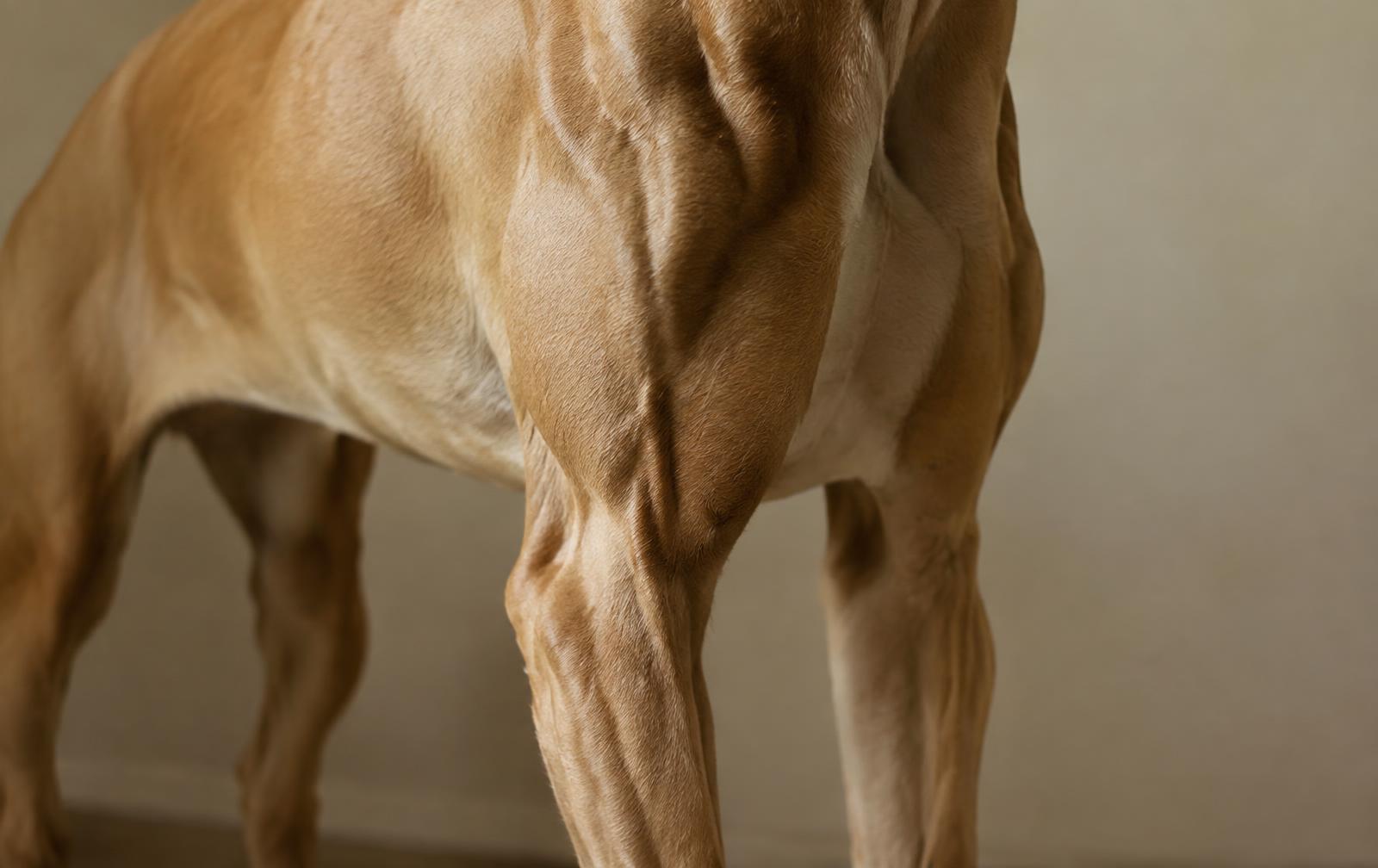
Carnosine is found in several tissues, but by far the largest store is in skeletal muscle — the muscles responsible for movement. Smaller amounts are present in the brain, heart and other tissues. Related compounds, such as anserine, are also found in the muscles of many species, and the overall mix differs from one animal to another.
Skeletal muscle is the body's main reservoir of carnosine in dogs and many other mammals.
Why skeletal muscle contains relatively high amounts
Comparative studies have measured carnosine and muscle buffering capacity across species. One frequently cited study compared thoroughbred horses, greyhounds and humans and found that the sprinting animals had notably higher levels of muscle dipeptides and buffering capacity than people. Findings like this suggest that carnosine levels may be linked to the kinds of physical demands a species has evolved for.
Muscle type matters too. In general, fast-twitch muscle fibers — those used for short, powerful bursts — tend to contain more carnosine than slower, endurance-oriented fibers. That pattern is part of why researchers associate carnosine with high-intensity effort.
Research context: Much of what we know about carnosine's distribution comes from comparative physiology and human sports science. Direct measurements in dogs exist but are far fewer, and they typically involve small numbers of animals.
Intracellular buffering, explained simply
When muscles work very hard, they produce hydrogen ions as a by-product of rapid energy production. As these ions build up, the inside of the muscle cell becomes more acidic. Muscle cells function best within a fairly narrow pH range, so the body has several systems that help soak up excess acidity. These are called buffers.
Carnosine is one of those buffers. Part of its structure — the histidine portion — is chemically well suited to accepting hydrogen ions at the pH found inside working muscle. You can think of it as one of many small sponges that help keep conditions inside the cell more stable during intense effort.
Carnosine is best understood as one contributor to the muscle's buffering system — not as a switch that changes how a dog performs.
The relationship to high-intensity muscle activity
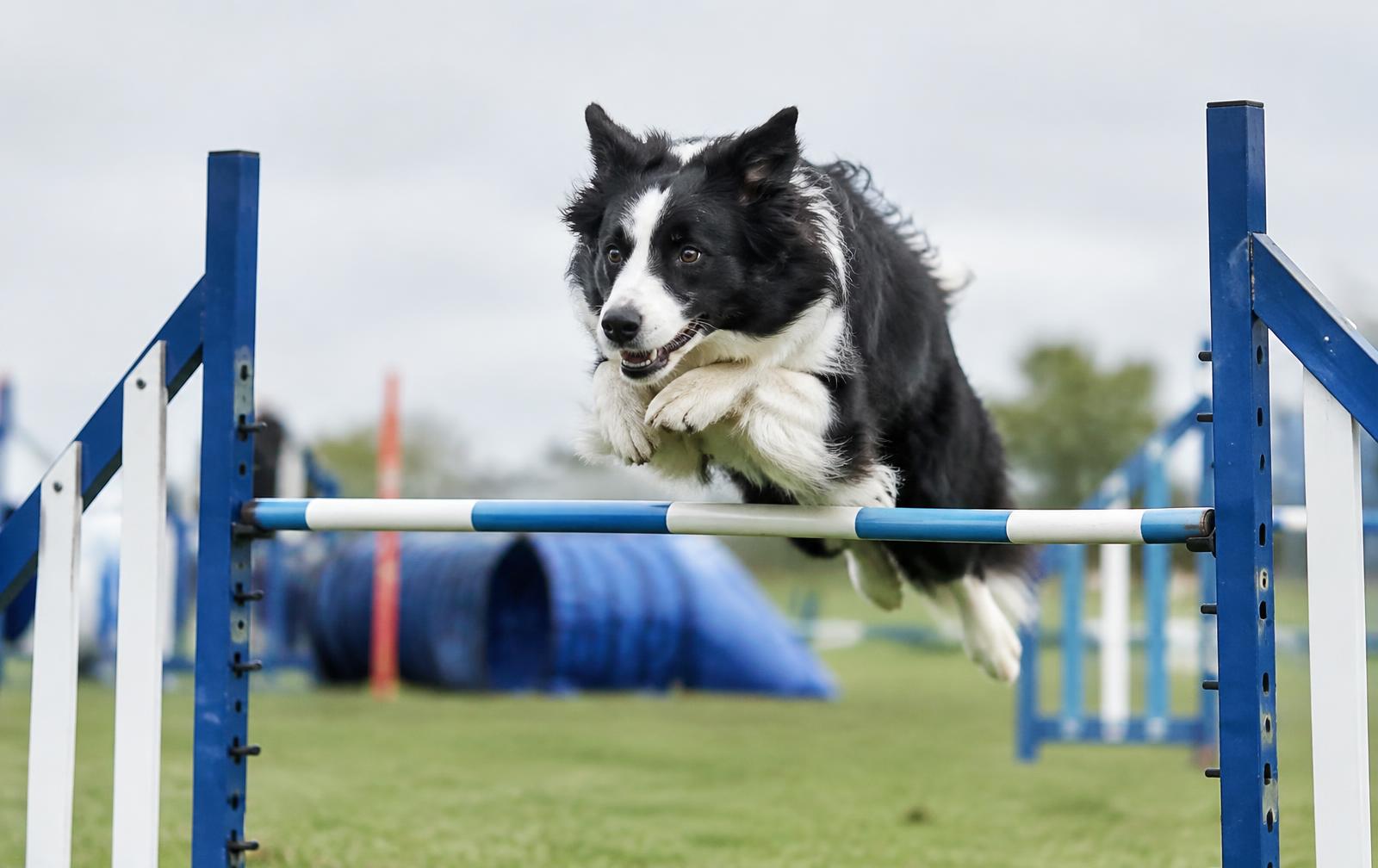
Because buffering matters most when acid is building up quickly, carnosine's best-described role is during short, intense bouts of activity — sprinting, jumping, or sudden bursts of effort. During gentle, steady activity, other energy pathways dominate and acid accumulation is much lower.
In humans, raising muscle carnosine through beta-alanine supplementation has been studied extensively, with some evidence of modest effects on certain kinds of high-intensity exercise. These results come from human athletes under controlled conditions. They are useful for understanding the biology, but they cannot simply be transferred to dogs.
Antioxidant-related research context
Beyond buffering, laboratory research has explored carnosine's ability to interact with reactive molecules — including certain reactive oxygen species and reactive aldehydes — and to bind some metal ions. These properties have led researchers to describe carnosine as having antioxidant-like and anti-glycation activity in experimental settings.
It is important to read this carefully. Many of these findings come from test-tube studies, cell cultures, or animal models other than dogs. They suggest interesting avenues for research, but they do not establish that carnosine produces specific health effects in a living dog.
Established biology versus claims that need more research
Some statements about carnosine rest on decades of consistent measurement. Others are reasonable hypotheses. A few are marketing language that borrows scientific vocabulary. Keeping them apart is the single most useful habit when reading about this molecule.
Reasonably well established
Carnosine is a dipeptide of beta-alanine and histidine, made inside the body.
Skeletal muscle is its main store in dogs and other mammals that have been studied.
Its histidine portion can accept hydrogen ions at the pH found inside muscle cells, so it contributes to intracellular buffering.
Greyhound muscle has been measured as having high buffering capacity and high histidine-dipeptide content compared with human muscle.
Plausible, but not demonstrated in dogs
That differences in muscle carnosine between individual dogs meaningfully affect how they perform or tire.
That raising carnosine through diet or supplements changes any measurable outcome in dogs.
That antioxidant or anti-glycation effects seen in laboratory systems happen to a meaningful degree in living dogs.
Biological plausibility is a reason to study something, not a demonstration that it works. Our guide to how to read carnosine research across dogs, horses, humans and the lab explains why this distinction comes up so often.
A helpful way to think about carnosine is to separate what is well established about its biology from claims that would require dedicated canine studies to support.
Why dog owners may be hearing more about carnosine
Interest in carnosine has grown for several reasons. Human sports nutrition has popularized beta-alanine and carnosine. Owners of working, sporting and senior dogs are increasingly interested in muscle health. And the pet wellness market has expanded rapidly, bringing many ingredients into the spotlight before canine-specific research has caught up.
None of this makes carnosine unimportant — it is a genuinely fascinating part of muscle physiology. But it does mean owners will encounter a mix of solid science, reasonable inference and overstated marketing. Knowing the difference is the best protection against confusion.
Carnosine is often confused with similar-sounding compounds
Carnosine is regularly mixed up with carnitine and creatine. All three are associated with muscle, but they do very different jobs: carnitine helps move fats into the cell's energy-producing compartments, and creatine provides a rapid energy reserve. If you want the details, see how carnosine differs from carnitine and why carnosine and creatine are not the same.
For a broader overview, see our complete guide to carnosine in dogs. For a closer look at what has actually been measured in canine muscle, read whether dogs naturally have carnosine in their muscles.
Practical takeaway
Carnosine is a normal part of your dog's muscle chemistry, not a foreign additive.
Its best-understood role is helping buffer acidity during intense muscle effort.
Many broader claims rely on human, equine or laboratory research rather than dog studies.
Any change to your dog's diet or supplements is best discussed with a qualified veterinarian.
If you would like to go further, our next explainer looks at how carnosine fits into exercise and recovery in active and working dogs — and where the evidence is strong versus where it remains limited.
What we know
- Carnosine is a naturally occurring dipeptide made from beta-alanine and histidine.
- Dogs synthesize carnosine and store it mainly in skeletal muscle.
- Carnosine contributes to intracellular pH buffering in muscle.
- Fast-twitch, high-intensity muscle fibers generally hold more carnosine.
What we don’t know yet
- How diet or supplementation changes muscle carnosine in different dog breeds and ages.
- Whether altering carnosine levels produces meaningful, measurable benefits in dogs.
- How laboratory antioxidant findings translate to living canine tissue.
- Appropriate long-term intake ranges for dogs, if any, beyond normal diets.
References
- Boldyrev AA, Aldini G, Derave W. Physiology and pathophysiology of carnosine. Physiological Reviews 93(4):1803–1845. 2013.[General / Review, Review] Source PubMed
- Harris RC, Marlin DJ, Dunnett M, Snow DH, Hultman E. Muscle buffering capacity and dipeptide content in the thoroughbred horse, greyhound dog and man. Comparative Biochemistry and Physiology Part A: Physiology 97(2):249–251. 1990.[Dog, Comparative measurement study (dog, horse, human)] Source PubMed
- Hipkiss AR. Carnosine and its possible roles in nutrition and health. Advances in Food and Nutrition Research 57:87–154. 2009.[General / Review, Review] Source PubMed
- Derave W, Everaert I, Beeckman S, Baguet A. Muscle carnosine metabolism and beta-alanine supplementation in relation to exercise and training. Sports Medicine 40(3):247–263. 2010.[Human, Review] Source PubMed
Carnosine for Dogs Editorial Team
Editorial Team
The Carnosine for Dogs Editorial Team creates evidence-led educational content about canine carnosine, muscle physiology, activity, recovery and related research.