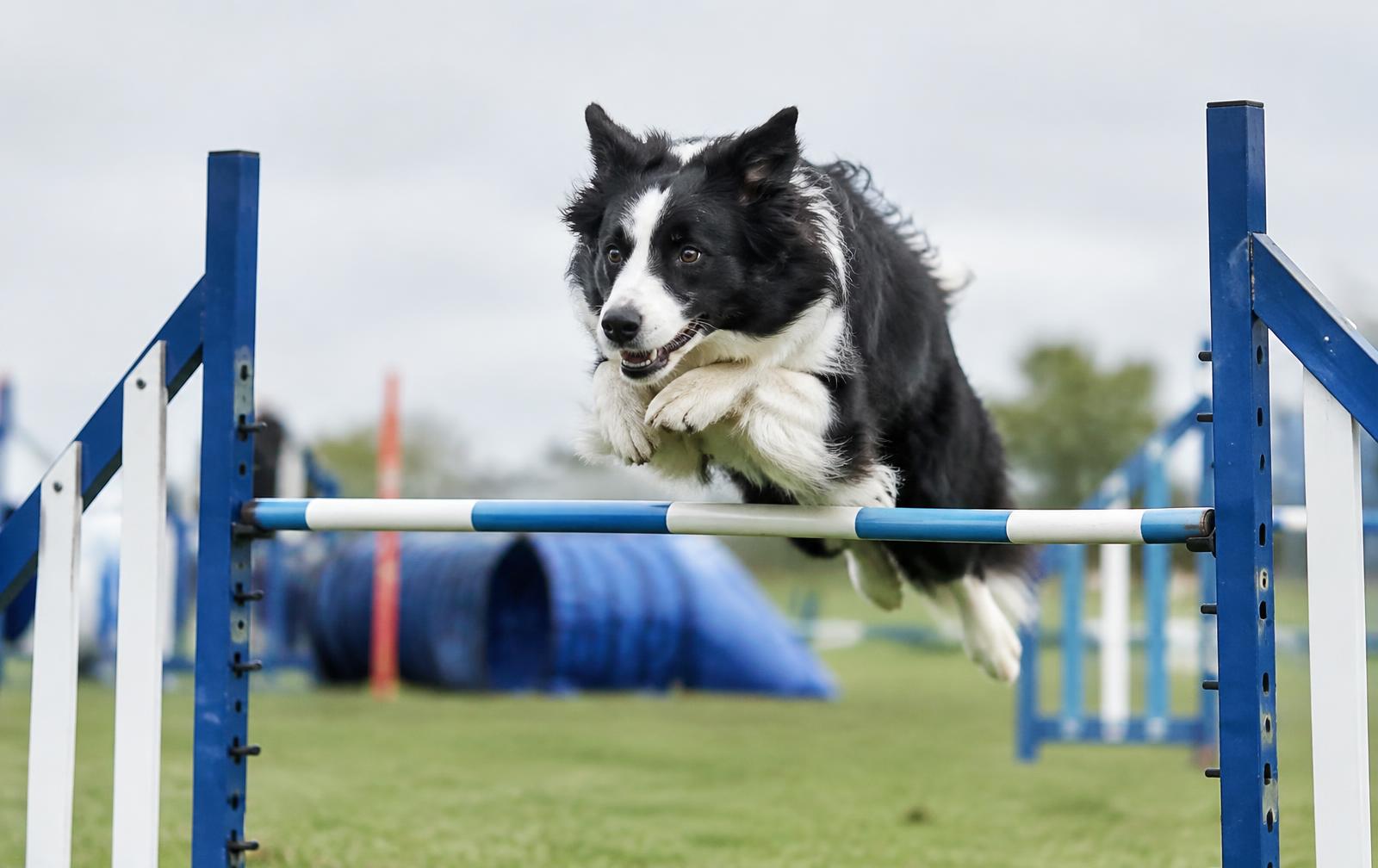
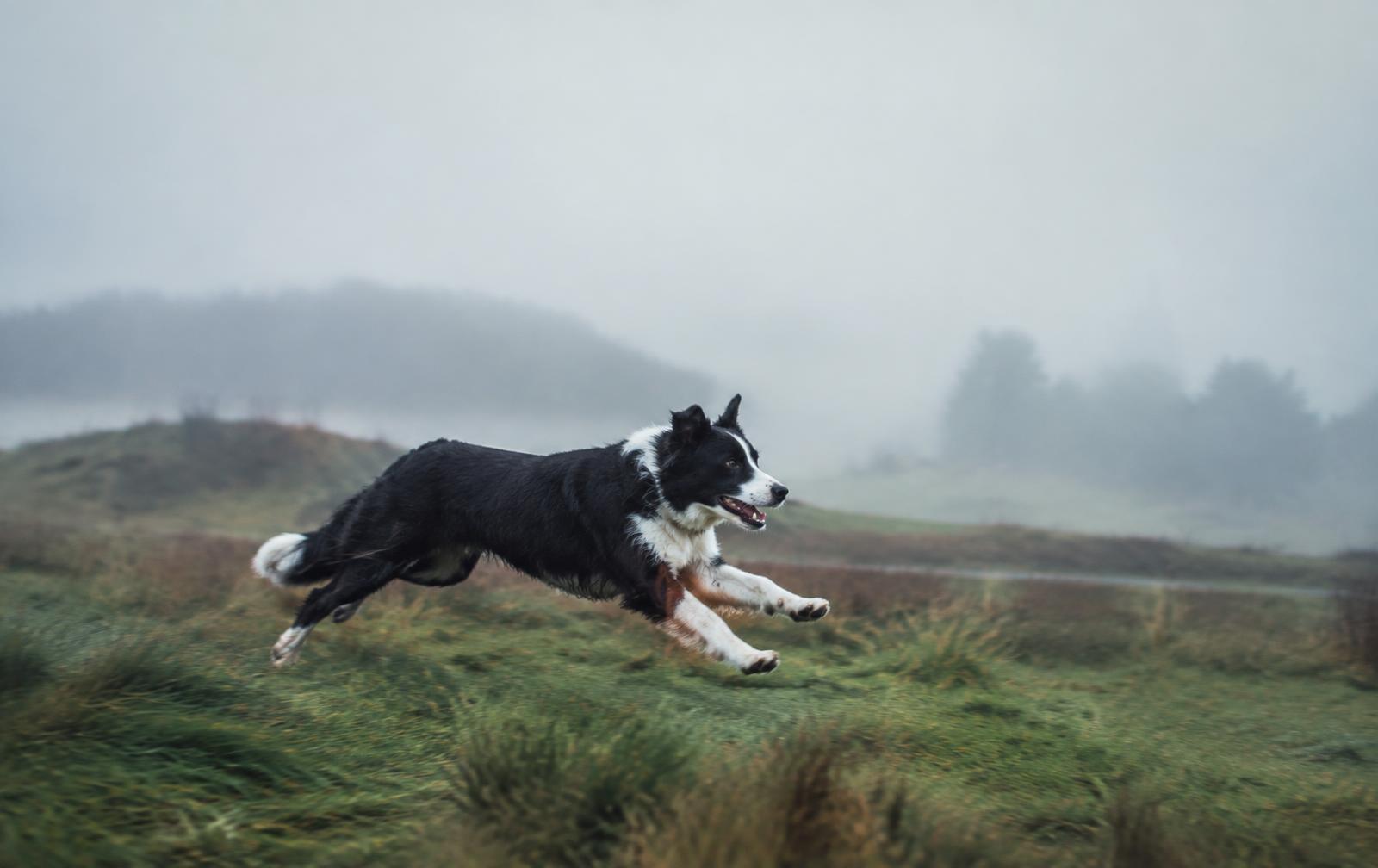
"Active dog" is a broad label. It covers a border collie running an agility course, a spaniel quartering a field all morning, a detection dog searching a building, a protection dog working in short explosive bursts, a search-and-rescue dog moving over rough ground, a sled dog pulling for hours, a greyhound sprinting, and a family dog that runs with its owner several times a week. These dogs are all active, but their bodies are not being asked to do the same thing.
The demands of any activity depend on its intensity, how long it lasts, how often it is repeated, how well conditioned the dog is, and the environment it happens in. Recovery needs differ for the same reasons. There is no single performance formula that applies to every active dog, and this guide does not try to offer one.
What counts as an active or working dog?
There is no formal threshold. In practice, the term usually describes dogs whose regular routine includes sustained, intense or skilled physical work beyond ordinary walks. That includes working dogs with a job (herding, detection, protection, search and rescue, assistance work with a physical component), sporting dogs (agility, flyball, canicross, dock diving, field trials, racing) and recreational athletes whose owners exercise them hard and often.
The distinction matters because much of the published canine exercise research comes from specialised groups — racing greyhounds, sled dogs, military or police dogs, hunting dogs — and their training, breeding and workloads may not resemble those of a pet that does agility at weekends — a point our article on why working dogs' physiology is different explores.
Why workload type matters
A useful way to think about activity is by its pattern of effort. The groups below are not rigid categories; most real activities mix them.
Short, high-intensity work
Sprinting, explosive take-offs and turns, and short bursts in protection work. Effort is near-maximal and lasts seconds. The limiting factors are power, rapid energy supply and the chemical changes that build up in muscle during maximal effort.
Intermittent work
Agility, much field work, repeated search tasks and herding. Bursts of fast movement are separated by slower movement, waiting or problem-solving. The dog repeatedly draws on fast energy supply and then partly recovers between efforts, so both power and the ability to recover quickly matter.
Sustained or endurance work
Long-distance running, prolonged hunting days and sled work. Intensity is moderate, but effort continues for a long time. Oxygen delivery, fuel availability, cooling and fluid balance become central.
A herding dog may sprint to head off a sheep, trot for an hour and then hold still; a hunting dog may combine all three patterns in a single day. The categories describe emphasis, not boundaries.
Sprint vs endurance demands
Sprint and endurance work stress the body in different ways. In a sprint, muscle needs energy faster than oxygen-dependent pathways can supply it, so it relies on stored, rapidly available sources and on breaking down glucose without oxygen. That produces rapid chemical change inside the muscle fibre, including a rise in hydrogen ions that lowers muscle pH.
In endurance work, effort is lower but prolonged. Most energy comes from oxygen-dependent metabolism of fats and carbohydrates, and the questions become whether the dog can keep supplying oxygen and fuel, get rid of heat and maintain hydration over hours. Fatigue in this setting builds more gradually and has different contributors. For what happens chemically during the hardest efforts, see what happens inside a dog's muscles during intense exercise.
How dog muscles supply energy during work
All muscle contraction runs on ATP. The muscle stores only a small amount, so it has to be replaced continuously. In brief:
- Stored ATP and phosphocreatine cover the first few seconds of maximal effort.
- Glycolysis — breaking down glucose and glycogen without oxygen — supplies energy quickly during hard efforts but cannot be sustained for long at high rates.
- Aerobic metabolism uses oxygen to release energy from carbohydrate and fat. It is slower to ramp up but supports sustained work.
These systems overlap rather than switching on one after another; their relative contribution shifts with intensity and duration. Our guide to canine muscle physiology and recovery explains each system and its by-products in depth, so we will not repeat it here.
Muscle fibres and different types of activity
Skeletal muscle contains fibres with different contractile and metabolic characteristics. Some contract more slowly and are suited to sustained, oxygen-dependent work; others contract faster and more powerfully but tire sooner. Research on dog muscle has also described hybrid fibres with mixed characteristics (Acevedo & Rivero, 2006).
The nervous system recruits fibres according to demand: lighter effort relies mainly on fatigue-resistant fibres, while harder efforts bring in more of the fast fibres as well. Fibre composition varies between muscles, individuals and breeds, and training can influence muscle characteristics. It is tempting to assign specific fibre profiles to particular breeds, but the evidence for broad breed-level conclusions is limited, so we avoid them.
Conditioning and adaptation
Regular, progressive exercise changes how the body responds to work. Conditioning can affect cardiovascular efficiency, how well muscle tolerates repeated effort, coordination and movement skill, the total workload a dog can manage and how the dog responds afterwards (Zink & Van Dyke, 2018).
Conditioning is also specific: preparation for sprint-type work differs from preparation for endurance work. This is an educational publication, not a training service, so we do not give exercise programmes. A veterinarian, ideally one with a sports medicine or rehabilitation background, is the right person to help plan conditioning for a particular dog.
What causes fatigue in active dogs?
Fatigue is a decline in the ability to produce or sustain effort, and it rarely has a single cause. In active and working dogs it can involve metabolic changes inside muscle, neuromuscular factors (how effectively the nervous system drives muscle), heat build-up, dehydration, reduced energy availability, accumulated workload across days, insufficient conditioning for the task, and tissue strain or injury (Allen et al., 2008). Which factors dominate depends on the kind of work: a sprinting dog and a dog on its third hour of hunting are tired for different reasons.
Our article on muscle fatigue in dogs explains these mechanisms and why lactate is not simply a waste product.
Heat, hydration and environment
Dogs handle heat differently from people. They have limited sweating ability, through the paw pads, and rely heavily on panting — evaporative cooling from the airways — along with other heat-loss routes. Panting works less well in hot, humid conditions, because evaporation is less effective when the air is already moist.
Muscle work generates heat, so prolonged or intense activity raises heat load, and the environment determines how easily that heat can be lost. Temperature, humidity, sun exposure, the surface underfoot, coat, body condition and fitness all play a part. Fluid losses from panting add up during long work, so access to water and the chance to rest matter for both performance and recovery.
Signs of heat illness, collapse or abnormal weakness need prompt veterinary attention. This guide does not give emergency treatment instructions; if you are worried, contact a veterinarian straight away.
Recovery after different types of work
Recovery is not one fixed process. After brief, intense work, the muscle restores its fast energy stores and returns towards its normal chemical state. After long work, rebuilding glycogen, restoring fluid balance and dealing with any tissue stress take longer. How long that takes depends on the type, intensity and duration of the exercise, the environment, conditioning, age, health and how much work was done in the preceding days.
Because of this, we do not give universal recovery timelines. The more useful habit is noticing how an individual dog normally responds to a given workload — its energy, movement and appetite the next day — and treating a clear change from that pattern as information. For more on what recovery involves physiologically, see the Muscle & Recovery guide, and for the role of diet, how nutrition may influence canine muscle health, with energy, protein and hydration covered further in the nutrition and muscle health guide.
Where does carnosine fit into active muscle?
Carnosine is a dipeptide made from beta-alanine and histidine that occurs naturally in skeletal muscle (Boldyrev et al., 2013). One established role is buffering: it helps absorb hydrogen ions inside muscle cells, which moderates the fall in pH during hard, mostly anaerobic effort (Abe, 2000). Muscle carnosine concentration varies between species, muscles and fibre types, and dog muscle contains appreciable amounts (Harris et al., 1990).
That gives a plausible reason researchers are interested in carnosine in the context of intense or intermittent work. It does not show that changing a dog's muscle carnosine would improve performance, fatigue or recovery in working or sporting dogs — that has not been demonstrated. Our guide to carnosine in dogs covers the science in detail, and carnosine, exercise and recovery in active dogs looks specifically at what the evidence does and does not say.
Working dogs vs recreationally active dogs
Professional working dogs often have structured training, regular workloads and selection for their role. Many recreationally active dogs exercise hard but irregularly — quiet weekdays and a long or intense weekend, for example. Irregular loads can matter because the dog may not be conditioned for the occasional peak.
Agility and high-intensity intermittent work
Agility combines short, fast runs with rapid acceleration, deceleration, jumping, tight turns and weaving, often repeated several times in a day with waiting in between. The physical demands sit at the intersection of power, fast energy supply, coordination and the ability to recover partially between runs. Repeated sharp changes of direction and landings also place considerable mechanical load on joints and soft tissues, so tissue strain is part of the picture alongside metabolic fatigue.
Hunting, herding and field work
Field work is typically long and varied: periods of trotting and searching punctuated by bursts of running, often over uneven ground, through cover or water, and in changeable weather. Herding adds rapid starts, stops and turns in response to livestock. These dogs need both endurance and repeated short efforts, and their days can be long.
Endurance and sustained activity
Sled dogs are the best-studied canine endurance athletes, and research on them has informed much of what is known about canine energy needs during prolonged exercise (Hill, 1998). In sustained work, fuel supply, hydration, heat management and the cumulative effect of consecutive days are central. Findings from elite sled dogs, however, describe highly trained, specifically bred animals and cannot be applied directly to a pet that runs alongside a bike.
Senior active dogs
Many older dogs remain active and benefit from it. Ageing can bring changes in muscle mass, conditioning, mobility, recovery and overall health that affect how much work a dog comfortably tolerates (Laflamme, 2005). Age alone is not a reason to stop exercise; it is a reason to pay closer attention to how the dog responds and to involve a veterinarian in decisions about workload. Our article on how dog muscles change with age explains these changes, and the Senior Dogs guide looks at keeping older dogs active safely.
Warning signs that deserve veterinary attention
Normal tiredness after hard work resolves as expected for that dog. Some changes should not simply be assumed to be ordinary fatigue:
- unusual or disproportionate weakness
- new reluctance to exercise or to start work
- repeated or persistent lameness
- collapse during or after exercise
- abnormal or distressed breathing
- recovery that is much slower than usual
- a marked change in performance
These signs have many possible causes, and working out which applies is a job for a veterinarian. Please have them assessed rather than waiting to see whether they pass.
What research can — and cannot — tell us
There is a genuine body of canine exercise research, but it is uneven. Evidence varies by breed, type of work and study design, and much of it comes from racing greyhounds, sled dogs and other specialised working populations that may not represent typical companion dogs. Human and equine exercise physiology is far more extensively studied and provides useful context, but it is not direct proof of what happens in dogs. Carnosine research in dogs, in particular, is limited.
See our guide on how to read carnosine research sets out how to weigh these differences.
Only two articles are filed under Active Dogs at the moment. These articles from other topics are closely related: