Senior Dogs
How Dog Muscles Change With Age
Loss of muscle is one of the most common — and most overlooked — changes in older dogs.
The short answer
As dogs age, many gradually lose skeletal muscle mass and strength, a process related to sarcopenia. This can happen even when body weight stays stable, because muscle may be replaced by fat. Reduced activity, changes in protein metabolism, chronic disease and joint pain can all contribute. Regular veterinary checks, including muscle condition scoring, appropriate activity and a suitable diet help manage these changes.
Key takeaways
- Age-related muscle loss is common in older dogs.
- Muscle can decline while body weight stays the same.
- Veterinarians can assess muscle using a muscle condition score.
- Gentle, regular activity helps maintain muscle and mobility.
- Disease-related muscle loss (cachexia) needs veterinary diagnosis.
Questions this article answers
- Do dogs lose muscle as they get older?
- What is sarcopenia in dogs?
- How can I help my senior dog keep muscle?
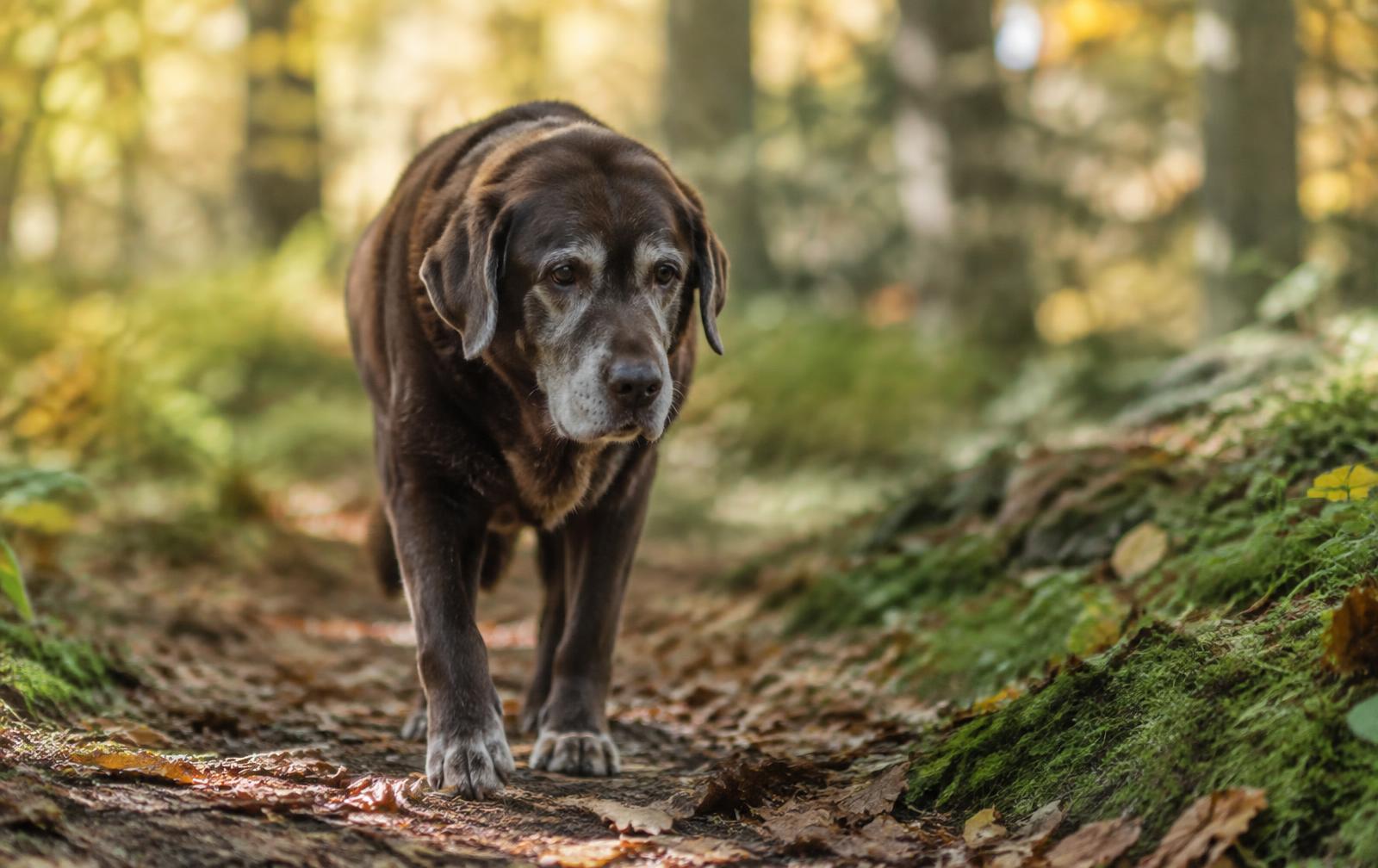
Owners often notice the signs before they have a name for them: a dog that hesitates before jumping into the car, takes the stairs more slowly, or seems bonier along the spine and hips. These changes can reflect age-related loss of muscle. It is one of the most common shifts in older dogs, and one of the easiest to miss.
What happens to muscle with age
Skeletal muscle is constantly being broken down and rebuilt. In younger adults, the two processes are roughly balanced. With age, that balance can shift, and muscle mass and strength gradually decline. In people, this is called sarcopenia, and veterinary researchers have described a comparable process in dogs.
The exact causes in dogs are not fully understood. Contributing factors are thought to include reduced physical activity, changes in how the body responds to dietary protein, hormonal changes, low-grade inflammation and changes in the nerves that control muscle. Much of the mechanistic research comes from humans and laboratory animals.
Weight is not the whole story
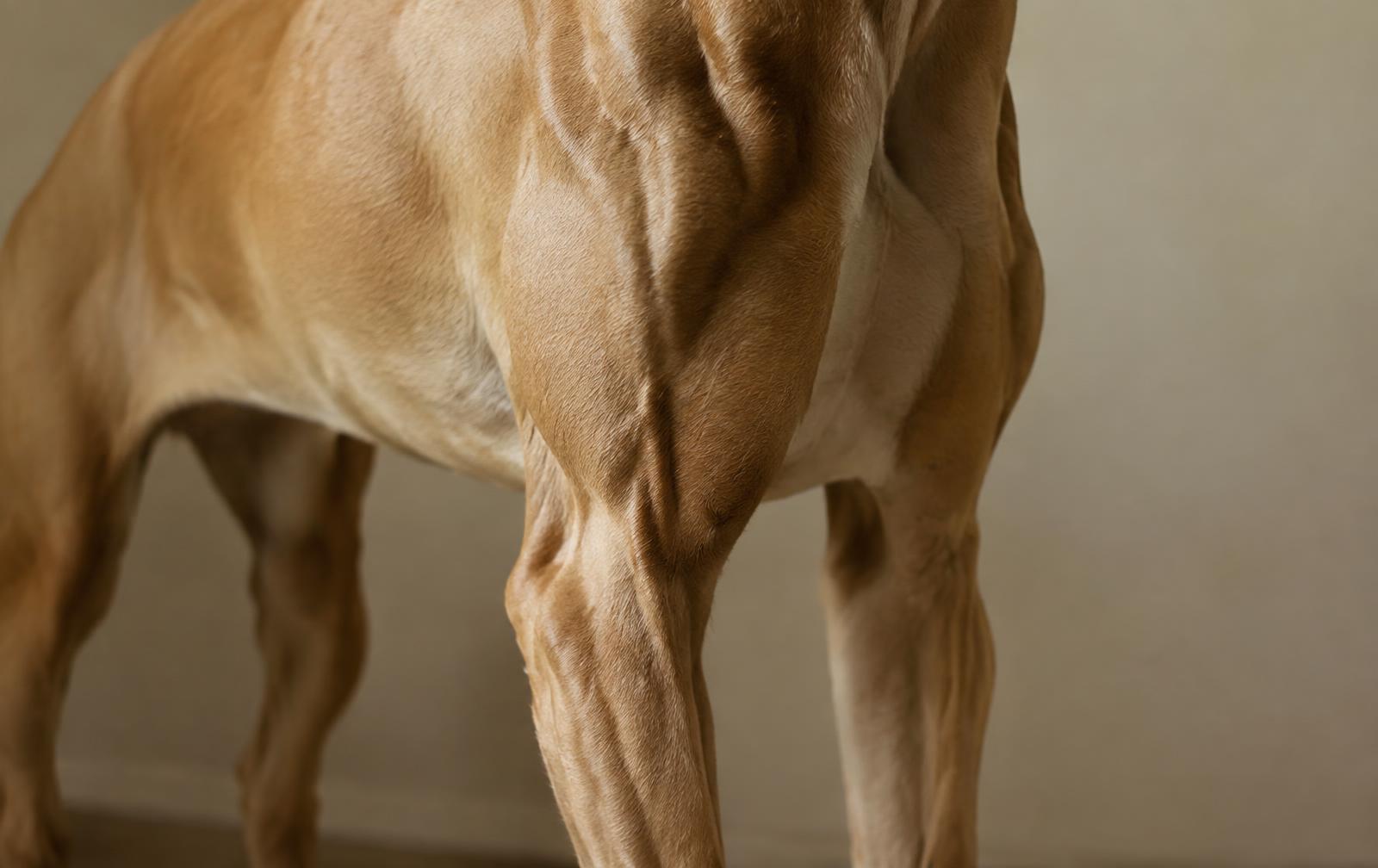
A key point for owners is that muscle loss can happen even while body weight stays the same — or increases. If muscle is gradually replaced with fat, the scale may not change, but the dog's strength and mobility can. That is why veterinarians increasingly assess muscle separately from body weight and body condition.
Muscle condition scoring
The World Small Animal Veterinary Association has published a muscle condition score, which grades muscle by feeling areas such as the spine, shoulder blades, skull and hips. It ranges from normal muscle to mild, moderate or severe loss. Including muscle condition in routine checks makes gradual changes easier to spot.
A stable weight does not always mean stable muscle.
Our guide to senior dog muscle health, activity and mobility sets out the difference between body condition and muscle condition in more detail.
Sarcopenia versus cachexia
Veterinary literature distinguishes between age-related muscle loss (sarcopenia) and muscle loss caused by disease (cachexia). Cachexia is associated with conditions such as heart disease, kidney disease and cancer, and it can progress faster. The two can overlap in older dogs. Because muscle loss can be an early sign of illness, any noticeable change should be checked by a veterinarian rather than assumed to be "just age."
What a veterinarian may look for
A routine examination of an older dog often includes body weight, body condition score and muscle condition score. The vet may run their hands over the spine, shoulder blades, skull and hips, where muscle loss tends to become noticeable first. They will also ask about appetite, activity and any changes you have noticed.
If muscle loss is greater than expected, they may suggest tests to look for underlying causes such as kidney, heart, endocrine or gastrointestinal disease. Tracking scores over time is often more informative than any single measurement.
Signs owners can watch for
A more prominent spine or hip bones even though weight has not changed.
Reluctance to jump, climb stairs or get up after rest.
Shorter walks, or slowing down earlier than before.
Changes in appetite, drinking or toileting habits.
Mobility, pain and activity
Muscle, joints and activity are closely linked. Joint pain, such as from osteoarthritis, can make a dog less willing to move. Less movement can lead to further muscle loss, which in turn can reduce support for the joints. Breaking that cycle often means treating pain as well as encouraging activity.
Gentle, regular exercise — walks suited to the dog's ability, controlled play and, where recommended, physiotherapy or hydrotherapy — helps maintain muscle. Short, frequent activity is often better tolerated than occasional long outings.
Staying active, sensibly
Regular, appropriate activity is one of the main ways to support muscle in older dogs. Several shorter walks may suit an older dog better than one long one, and gentle variety — sniffing walks, slopes, controlled play — can engage different muscles. Swimming or underwater treadmill work is sometimes recommended by rehabilitation vets because it reduces load on the joints.
If pain is limiting movement, addressing it is often the most important step. Untreated discomfort can make a dog less active, which can contribute to further muscle loss. A vet can assess whether pain relief, physiotherapy or a structured exercise plan is appropriate.
Nutrition
Older dogs still need adequate high-quality protein to maintain muscle; veterinary nutrition reviews caution against routinely restricting protein in healthy senior dogs. Energy needs vary: some older dogs become less active and gain fat, while others lose weight. Diet should be tailored to the individual, particularly if the dog has kidney disease or other conditions. See Can Nutrition Influence Canine Muscle Health?, or our fuller guide to protein, energy and body condition in dogs.
And carnosine?
Carnosine is naturally present in canine muscle, as described in Do Dogs Naturally Have Carnosine in Their Muscles?. Some human and laboratory research has explored whether carnosine changes with aging, but it is not known whether muscle carnosine changes with age in dogs, or whether that would matter clinically.
For the wider nutritional picture, see how nutrition supports muscle health in dogs, and for background on the molecule itself, what carnosine is and why it is found in dog muscle.
Practical takeaway
- Watch for reduced muscle over the spine, hips and shoulders, and for reluctance to jump or climb.
- Ask your veterinarian to assess muscle condition at routine visits.
- Keep your dog moving with regular, appropriate activity.
- Do not cut protein in an older dog's diet without veterinary advice.
- Treat sudden or rapid muscle loss as a reason for a veterinary check.
What we know
- Age-related loss of lean mass is recognized in dogs.
- Muscle condition scoring is an established clinical tool.
- Sarcopenia and cachexia are distinct, though they can overlap.
What we don’t know yet
- The exact mechanisms of canine sarcopenia.
- Which interventions best preserve muscle in aging dogs.
- Whether muscle carnosine changes with age in dogs.
Bottom line
Muscle loss in older dogs is common but not something to ignore. Noticing it early and involving your veterinarian gives the most options.
References
- Freeman LM. Cachexia and sarcopenia: emerging syndromes of importance in dogs and cats. Journal of Veterinary Internal Medicine 26(1):3–17. 2012.[Dog, Veterinary review] Source PubMed
- Laflamme DP. Nutrition for aging cats and dogs and the importance of body condition. Veterinary Clinics of North America: Small Animal Practice 35(3):713–742. 2005.[Dog, Veterinary review] Source PubMed
- WSAVA Global Nutrition Committee. Muscle Condition Score chart for dogs. World Small Animal Veterinary Association. 2013.[Dog, Clinical tool] Source
- Freeman L, Becvarova I, Cave N, et al.. WSAVA Nutritional Assessment Guidelines. Journal of Small Animal Practice 52(7):385–396. 2011.[Dog, Professional guideline] Source PubMed
Carnosine for Dogs Editorial Team
Editorial Team
The Carnosine for Dogs Editorial Team creates evidence-led educational content about canine carnosine, muscle physiology, activity, recovery and related research.