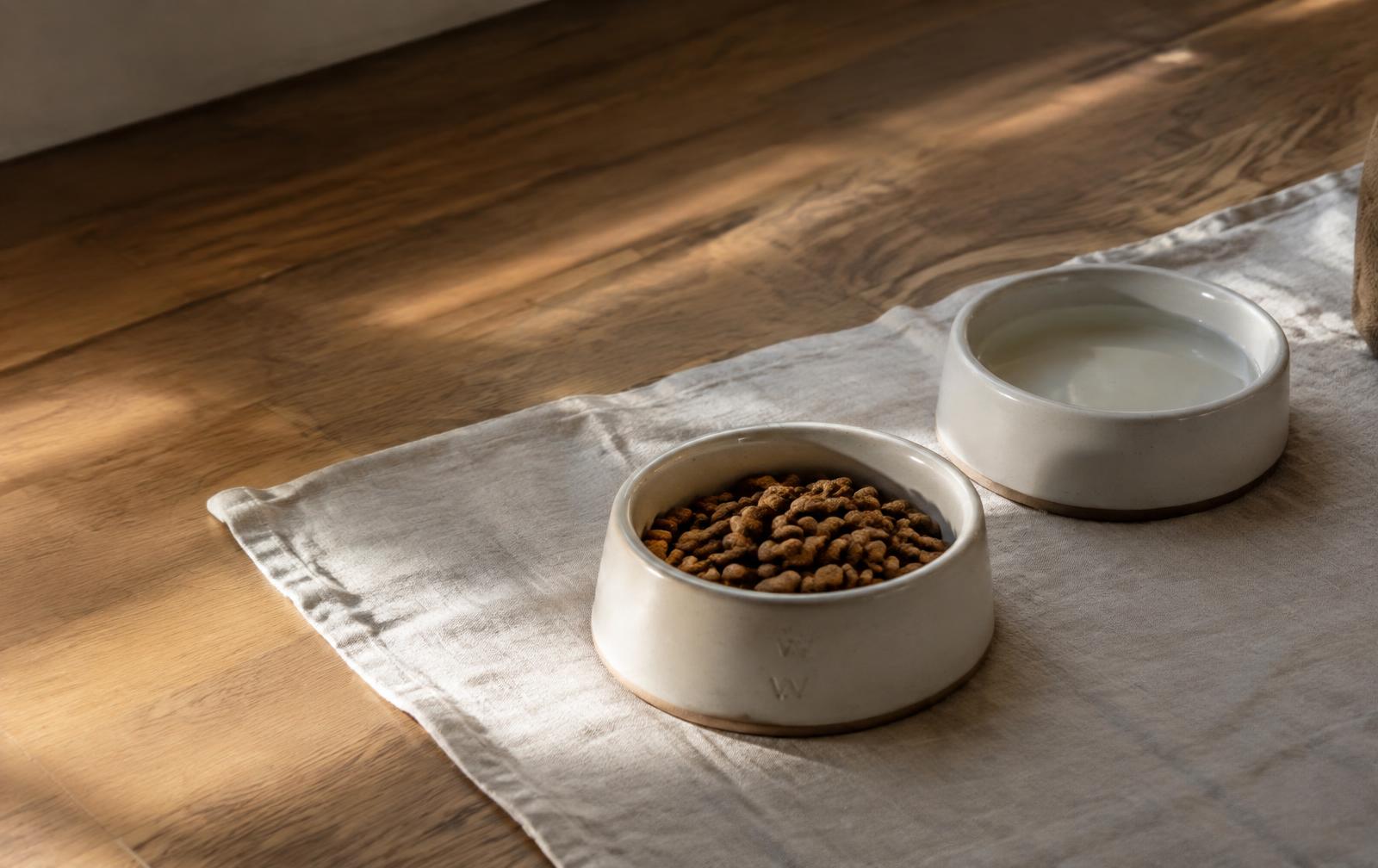
Muscle health depends on more than exercise. Nutrition supplies the amino acids muscle is built from, the energy that powers it, the vitamins and minerals involved in its chemistry, and support for hydration. But no single nutrient determines muscle health, and a dog’s needs vary with age, activity, body size, health, reproductive status and the rest of the diet. This guide covers nutrition as it relates to muscle, exercise, recovery and healthy aging — it is not a guide to choosing dog food. For a shorter introduction, read can nutrition influence canine muscle health?
Why nutrition matters for muscle
Skeletal muscle is living tissue that is continuously broken down and rebuilt. That turnover needs a steady supply of raw materials and energy. When the diet provides enough of both, muscle can be maintained and repaired after use. When it does not — because intake is too low, the diet is unbalanced, or illness changes how nutrients are used — muscle can be lost over time (Laflamme, 2005). For how muscle produces and uses energy during work, see our guide to canine muscle, exercise and recovery.
Protein and amino acids
Proteins are chains of amino acids. Digestion breaks dietary protein down into amino acids, which the body then uses to build its own proteins — in muscle, but also in skin, blood, enzymes, hormones and the immune system. Dogs can make some amino acids themselves; ten must come from food (National Research Council, 2006).
Adequate protein is important, but more is not automatically better. Once needs are met, extra protein is mostly used for energy or excreted rather than turned into extra muscle. What counts as adequate depends on the individual dog and the whole diet, which is why reference standards set minimum requirements and recommended allowances rather than a single ideal figure.
What does “protein quality” mean?
Two foods with the same protein percentage can differ in how useful that protein is. Protein quality usually refers to three related ideas:
Amino acid profile — whether the protein supplies the essential amino acids in proportions that match the dog’s needs.
Digestibility — how much of the protein is actually broken down and absorbed.
Bioavailability — how much of what is absorbed can be used by the body.
A shortage of one essential amino acid limits how well the others can be used, however plentiful they are. Complete diets are formulated to account for this, which is one reason the overall diet matters more than the protein figure on a label.
Energy intake and muscle maintenance
Energy comes from fat, carbohydrate and protein. When a dog takes in too little energy for its needs, the body draws on its reserves — fat first, but also protein from tissues including muscle. Protein that is burned for fuel is not available for maintenance and repair. That is one reason unplanned weight loss can involve muscle loss, not just fat (Laflamme, 2005).
Excess energy is a problem too. Energy intake above need is stored as body fat, and excess fat adds load to joints and can make activity harder. Extra calories do not build muscle on their own; muscle responds to use, adequate protein and an energy intake that suits the dog.
Why calories and protein must be considered together
Protein and energy are linked. A diet with plenty of protein but too little energy may still leave a dog losing muscle, because protein is diverted to fuel. Cutting a dog’s food to reduce weight also cuts the protein it receives unless the diet is adjusted. This is why weight-loss and senior diets are usually formulated with protein and energy considered together, and why changes to a dog’s ration are best discussed with a veterinarian.
Body condition vs muscle condition
Body condition score primarily evaluates body fat. Muscle condition score evaluates muscle mass, using areas such as the spine, skull, shoulder blades and pelvis (WSAVA Global Nutrition Committee, 2013). Because they measure different tissues, a dog can:
be overweight and still be losing muscle;
lose body weight and muscle together;
keep the same weight while its body composition changes.
Nutrition decisions based on weight alone can therefore miss what is happening to muscle. Our Senior Dogs guide explains the two scores in more detail.
Nutrition for active and working dogs
Active dogs can differ from pet dogs in energy expenditure, water needs, feeding logistics around work and the demands of recovery — and these differ again between a sprinting dog, an agility dog and a dog working for hours. Much of the canine evidence on energy use during prolonged work comes from sled dogs, whose needs are unusually high (Hill, 1998). There is no universal feeding schedule for active dogs; diet and timing are best matched to the actual workload. See our guide to active and working dogs for how workload, conditioning and recovery fit together.
Nutrition for senior dogs
Older dogs may need closer attention to body condition, muscle condition, appetite, energy intake, dietary protein and any medical conditions. Some become less active and gain fat; others lose weight and muscle. Veterinary nutrition reviews caution against routinely restricting protein in healthy older dogs (Laflamme, 2005). There is no single “senior diet” that suits every older dog. Read more in our guide to aging, activity and mobility in older dogs and in how dog muscles change with age.
Hydration and exercise
Water is essential for circulation, temperature regulation and normal muscle function. Exercise and warm weather increase water loss, particularly through panting, so active dogs need regular access to fresh water during and after activity (Zink & Van Dyke, 2018). Needs vary with workload, environment and the individual dog, so this guide gives no fixed drinking formula.
Vitamins and minerals
Vitamins and minerals are involved in energy metabolism, muscle contraction, nerve signalling and protection against oxidative damage. Requirements for dogs are set out in reference standards (National Research Council, 2006). Both shortages and excesses can cause problems, which is a reason not to add vitamin or mineral products to a complete diet without veterinary advice.
Complete and balanced diets
A complete and balanced diet supplies all required nutrients in appropriate amounts and proportions for a dog’s life stage. Evaluating the whole diet matters because nutrients work together. Extra protein, amino acids, carnosine or supplements cannot make up for an otherwise inappropriate diet. When a home-prepared or unusual diet is being considered, a veterinarian or veterinary nutritionist can help check that it is complete.
Where does dietary carnosine come from?
Carnosine occurs naturally in animal tissues, especially skeletal muscle, so diets containing meat supply some carnosine, and the amount varies with the type of tissue and food (Boldyrev et al., 2013). Dogs also make carnosine in their own muscles from the amino acids beta-alanine and histidine (Harris et al., 1990). Knowing that a food contains carnosine does not tell us what effect it has on a dog’s muscle carnosine. For background, see what carnosine is and why it is found in dog muscle.
Does eating more carnosine mean more muscle carnosine?
Not necessarily. Dietary carnosine is digested and absorbed, and in humans much of it is broken down into its component amino acids rather than stored intact in muscle (Boldyrev et al., 2013). Human supplementation research has largely focused on beta-alanine rather than carnosine itself, and those findings cannot simply be applied to dogs.
The presence of carnosine in food does not automatically mean:
it is stored directly in muscle;
exercise performance improves;
recovery is better;
there is any clinical benefit.
Whether dietary carnosine meaningfully changes muscle carnosine in dogs has not been well studied. Our guide to carnosine in dogs covers what is and is not known.
Supplements: what owners should understand
Supplements vary enormously in purpose, quality and evidence. An ingredient can be biologically plausible — it has a known role in the body — without being shown to help when given as a supplement. Any supplement should be considered in the context of the dog’s whole diet and health, and veterinary guidance is sensible when nutrition or health needs are complex. Carnosine supplementation has not been proven to benefit muscle or performance in dogs.
When medical conditions change nutritional needs
Conditions affecting the kidneys, liver, gastrointestinal tract or endocrine system, as well as problems with mobility, appetite or body weight, can all change what a dog needs from its diet. Some illnesses increase muscle breakdown or reduce appetite, and some require specific nutrient adjustments. These are veterinary decisions; a veterinarian or board-certified veterinary nutritionist can advise on diet for a dog with a medical condition.
What research can — and cannot — tell us
Established nutrition principles — that muscle depends on adequate protein and energy apply across mammals.
Canine nutrition research — dog-specific studies and reviews exist for requirements, aging and exercise, though some areas, such as working dogs, rely on a limited number of populations (Hill, 1998; Laflamme, 2005).
Veterinary guidelines — nutrient standards and assessment tools such as the NRC requirements and the WSAVA muscle condition score.
Human and other-species studies — useful context, particularly for carnosine and beta-alanine, but not evidence of effects in dogs.
Open questions — how diet affects muscle carnosine in dogs, and whether that matters for health or performance.
To weigh studies yourself, read how to read carnosine research across dogs, horses, humans and the lab.
Only one article is currently filed under Canine Nutrition. These articles from other topics add relevant background: