Carnosine Basics
Carnosine vs Creatine: Why They Are Not the Same
Both are found in muscle and both are linked to high-intensity effort, but they work in completely different ways.
The short answer
Carnosine and creatine are different compounds. Creatine, mainly as phosphocreatine, acts as a rapid energy reserve that helps regenerate ATP during the first seconds of intense effort. Carnosine is a dipeptide that buffers hydrogen ions inside muscle cells, helping limit pH changes. Both are made by the body and stored in muscle, but they address different aspects of muscle function.
Key takeaways
- Creatine supports rapid ATP regeneration through the phosphocreatine system.
- Carnosine acts as an intracellular buffer against acidity.
- They are structurally unrelated: creatine is derived from arginine, glycine and methionine; carnosine from beta-alanine and histidine.
- Much of the research on both comes from humans; canine evidence is limited.
Questions this article answers
- Is carnosine the same as creatine?
- What does creatine do in muscle?
- Do dogs make creatine?
Creatine is one of the best-known muscle-related compounds in human sport, and carnosine is increasingly discussed alongside it. Because both are concentrated in muscle and both are associated with short, intense efforts, they are sometimes treated as variations on the same theme. They are not. Understanding how each works makes it much easier to evaluate claims about either.
Two different molecules
Creatine is a small nitrogen-containing compound made in the body from three amino acids: arginine, glycine and methionine. Most of it is stored in skeletal muscle, where a large share is held as phosphocreatine.
Carnosine is a dipeptide made from beta-alanine and histidine, also concentrated in skeletal muscle. Structurally, the two have nothing in common beyond being built, ultimately, from amino-acid-related starting materials.
What creatine does: a fast energy reserve
Muscles contract using ATP, the cell's immediate energy currency. Muscle cells hold only a small amount of ATP at any moment — enough for a few seconds of hard work. Phosphocreatine acts as a ready reserve: it donates a phosphate group to regenerate ATP almost instantly. This system is particularly important at the very start of a sprint or a sudden burst of effort, before slower energy pathways have ramped up.
What carnosine does: a buffer against acidity
As intense exercise continues, muscle cells break down glucose rapidly and hydrogen ions accumulate. The internal environment becomes more acidic, which can interfere with the processes that produce force. Carnosine helps buffer some of those hydrogen ions. It does not produce energy itself. Its contribution is to help keep the internal chemistry of the cell within a workable range. We describe this process in What Happens Inside a Dog's Muscles During Intense Exercise?.
Creatine helps supply energy quickly. Carnosine helps manage the chemical consequences of using it quickly.
A closer look at the phosphocreatine system
Muscle holds only a small amount of ATP, the molecule that directly powers contraction — enough for a few seconds of all-out work. Phosphocreatine acts as an immediate backup. An enzyme called creatine kinase transfers a phosphate group from phosphocreatine to ADP, rebuilding ATP almost instantly.
This makes the phosphocreatine system the dominant energy source in the first seconds of explosive effort: the launch out of a start box, a sudden leap, the first strides of a chase. Its stores fall quickly, and rebuilding them depends on aerobic metabolism during rest. Most of the body's creatine is found in skeletal muscle, and dogs both make it themselves (in the kidney, liver and pancreas in mammals generally) and obtain it from meat.
Carnosine works on a different problem
Creatine is about supplying energy fast. Carnosine is about coping with a by-product of supplying energy fast. When effort continues beyond the first few seconds, rapid glycolysis takes over a larger share of ATP production, and hydrogen ions accumulate. Carnosine is one of the molecules inside the cell that can take up some of those ions, which helps limit the fall in pH.
So the two molecules are active in overlapping moments of high-intensity work, but they are not interchangeable and one cannot substitute for the other. For a fuller account of carnosine itself, see what carnosine is and how it functions inside muscle.
Side-by-side
- Building blocks: creatine from arginine, glycine and methionine; carnosine from beta-alanine and histidine.
- Main function: creatine regenerates ATP; carnosine buffers hydrogen ions.
- Time frame: phosphocreatine matters most in the first seconds of intense work; buffering becomes more relevant as high-intensity effort continues.
- Where made: creatine synthesis involves the kidney and liver; carnosine is made mainly within muscle.
A note on supplement research
Both creatine and beta-alanine (the building block that limits carnosine production in humans) have been widely studied as supplements in human athletes. That research is about people, under specific training conditions. It does not tell us whether either approach is useful, safe or appropriate for dogs, and this article does not suggest that it is.
Dogs differ from humans in their muscle fibre composition, metabolism and the type of exercise they typically perform. Findings in one species should be treated as context, not proof. For more on reading research across species, see How to Read Carnosine Research.
And carnitine?
A third compound, carnitine, is often added to the mix. It has yet another role — transporting fatty acids for energy. See Carnosine vs Carnitine for Dogs.
What this comparison does not tell us
Human sports science has studied both creatine and beta-alanine supplementation extensively, and both can raise their respective muscle stores in people. Those findings are human evidence. They do not establish that either supplement produces the same muscle changes, or any performance outcome, in dogs.
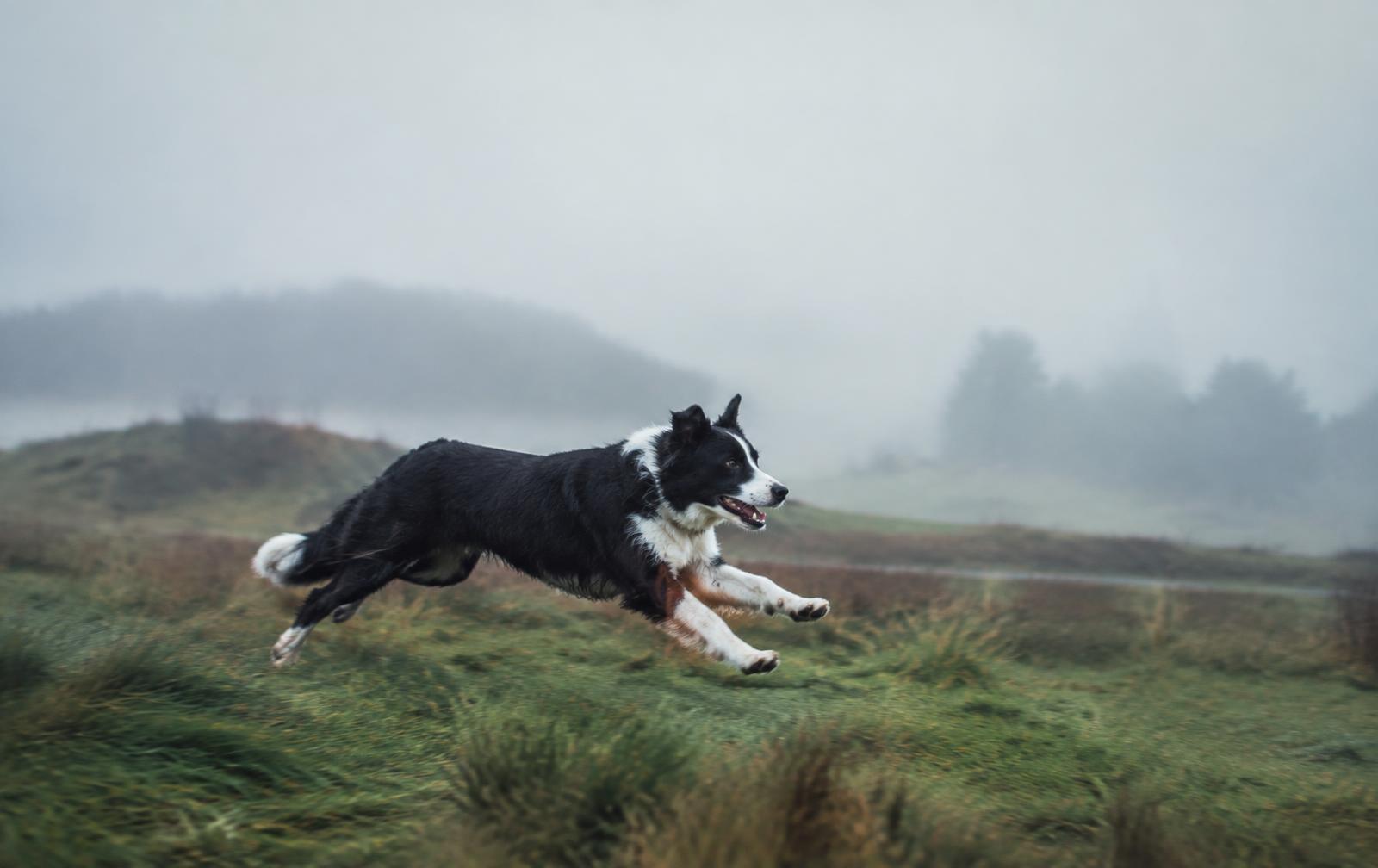
Dogs also differ from people in diet, muscle fibre composition and the activities they perform. A border collie herding sheep and a human sprinter face very different demands. When you see either compound discussed for dogs, check which species the evidence actually comes from — our guide to reading carnosine research explains what to look for, and our guide to carnosine in dogs brings the basics together.
Practical takeaway
Creatine and carnosine are complementary parts of muscle physiology, not interchangeable alternatives. Healthy dogs make both. If you encounter a product or article that treats them as equivalent, that is a signal to read it more critically — and any question about supplementing your dog belongs with your veterinarian.
What we know
- Phosphocreatine is a rapid energy buffer in mammalian skeletal muscle.
- Carnosine contributes to intracellular pH buffering in mammalian muscle.
- Both compounds are synthesized by the body.
What we don’t know yet
- How canine muscle creatine and carnosine stores vary between individual dogs.
- Whether either compound offers benefits to healthy dogs when added to the diet.
Bottom line
Creatine and carnosine both matter for intense muscle work, but they solve different problems: one supplies energy quickly, the other helps manage acidity.
References
- Wyss M, Kaddurah-Daouk R. Creatine and creatinine metabolism. Physiological Reviews 80(3):1107–1213. 2000.[General / Review, Review] Source PubMed
- Boldyrev AA, Aldini G, Derave W. Physiology and pathophysiology of carnosine. Physiological Reviews 93(4):1803–1845. 2013.[General / Review, Review]Comprehensive review of carnosine biology across species. Source PubMed
- Derave W, Everaert I, Beeckman S, Baguet A. Muscle carnosine metabolism and beta-alanine supplementation in relation to exercise and training. Sports Medicine 40(3):247–263. 2010.[Human, Review]Human-focused; context only, not evidence for dogs. Source PubMed
Carnosine for Dogs Editorial Team
Editorial Team
The Carnosine for Dogs Editorial Team creates evidence-led educational content about canine carnosine, muscle physiology, activity, recovery and related research.